The plot-versus-flat argument in Gurugram usually gets settled by whoever is louder. Plot people say land never depreciates. Flat people say a plot earns you nothing for a decade. Both are right, which is why the argument never ends.
Here is the version we give clients, which is less satisfying and more useful: they are different instruments with different jobs, and the mistake is not picking the wrong one — it is picking one without knowing which job you were hiring it for.
The case for plots, stated fairly
Land supply in Gurugram is finite and the building on top of it is not. That is the whole argument and it is a good one. A twenty-year-old apartment is a twenty-year-old building with a lift that needs replacing and a facade that needs work. A twenty-year-old plot is a plot.
The numbers support it. Land prices in tier-one Indian cities have been reported outperforming multi-storey apartment prices by roughly 15 to 20 percent in recent years, and in Gurugram's growth corridors plotted development has been the format that moved fastest.
Plots also give you control. You build what you want, when you want, to the specification you want. You are not waiting for a developer's 2031 handover, you are not paying for a clubhouse you will use twice, and there is no association deciding what colour your balcony grille can be.
The case for flats, stated fairly
A flat is an asset that starts working immediately. You can let it the month you take possession. A plot produces nothing until you have built on it, which means a plot purchase is really two purchases — the land, then the construction — separated by however long it takes you to arrange the second.
Three more advantages that matter more than people expect:
- Financing is easier. Banks lend against apartments readily and at high loan-to-value. Plot loans are a different product, generally at lower LTV and shorter tenure, and construction finance is a third product on top of that.
- Liquidity is better in the established sectors. A three-bedroom flat in a known society has a queue of buyers who understand exactly what they are buying. A plot has a smaller, more specialised buyer pool.
- The diligence is simpler. A licensed apartment project in an HSVP sector has a title chain that is clean by construction. Plotted purchases, especially at the edges, do not.
Side by side
| Plot | Flat | |
|---|---|---|
| Income from day one | None until built | Rent on possession |
| Depreciation | None - land only | The structure ages and costs money |
| Financing | Lower LTV, shorter tenure, separate construction loan | Straightforward, high LTV |
| Resale liquidity | Thinner, more specialised buyers | Deep in established sectors |
| Diligence burden | High - licence, CLU, layout, title chain | Lower in licensed projects |
| Maintenance | Minimal, but the plot must be secured | Monthly, and it rises over time |
| Best horizon | Seven years and up | Three years and up |
What each actually costs in Gurugram
Reported figures for 2026, treated as ranges because sources differ:
- Licensed plots under DDJAY in Sohna — around Rs 54,000 per square yard on average, against roughly Rs 78,500 per square yard for DDJAY plots closer to central Gurugram.
- Plot rates in Dwarka Expressway sectors — Sector 102 land has been reported around Rs 25,900 to Rs 33,000 per square foot of plot area.
- Apartments city-wide — quoted around Rs 13,000 to Rs 14,500 per square foot of super area.
Be careful comparing those last two directly. Plot rates are quoted on plot area and apartment rates on super area, which includes your share of lobbies, staircases and the clubhouse. They are not the same denominator and treating them as one is how people convince themselves a plot is cheaper than it is.
The middle option most people miss: the independent floor
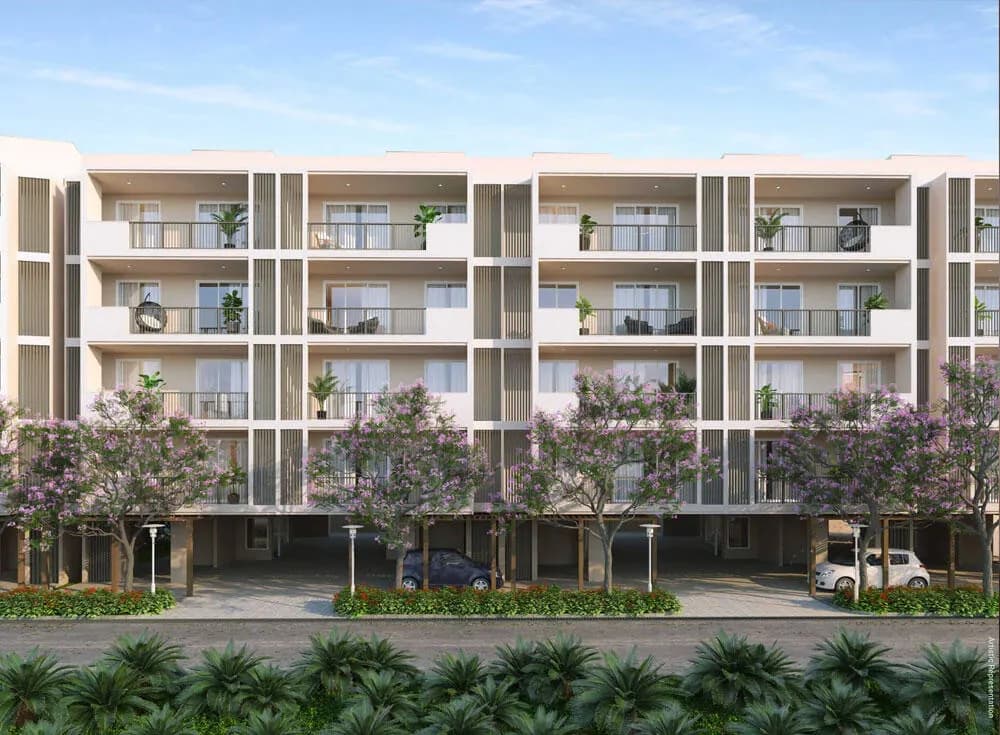
Gurugram's plotted-colony policy — Deen Dayal Jan Awas Yojana, introduced by the Haryana government in 2016 to curb unauthorised colonies — created a format that sits between the two: an independent floor on a licensed plot.
You get a whole floor with its own entrance, in a low-density colony, at a ticket well below a comparable apartment, without the clubhouse maintenance bill. What you give up is the amenity, the security infrastructure and, frequently, the resale depth of a branded society.
Signature Global, ROF, Ganga Realty and Bestech have all been building DDJAY floor townships across New Gurugram and Dwarka Expressway. For a lot of end-users this is the most sensible product in the city and almost nobody markets it to them, because the commission on a floor is smaller than on a luxury apartment.
The catch is the same one as with plots: the scheme's government framework does not make an individual project safe. Verify it yourself.
The diligence that actually differs
For a flat in a licensed project, your checks are the standard ones — HARERA registration for the specific phase, the builder-buyer agreement, the occupancy certificate if it is ready.
For a plot, add these, and treat them as non-negotiable:
- The licence number and layout approval for the colony, issued by the Haryana town and country planning department. No licence means no legal colony, whatever the site office says.
- Change of Land Use certificate. A great deal of land marketed for housing at the district edges is still agricultural. Without the CLU you are buying farmland with a brochure attached.
- Mutation and jamabandi records at the local tehsil, confirming the seller is actually the recorded owner and the chain is continuous.
- Encumbrance certificate, going back at least fifteen years, confirming no pending mortgage or charge.
- HARERA registration if a developer is involved in the plotted colony. Unregistered plotted colonies are common at the edges.
NRIs have an extra constraint worth stating: agricultural land, plantation property and farmhouses cannot be purchased without RBI approval, which is rarely granted. That restriction bites hardest exactly where plots are cheapest. Our NRI property guide covers the FEMA position.
Our actual view
Buy a plot if you have a horizon of seven years or more, the capital to build without a rushed loan, and the patience to do title work properly. The upside is real and the format has genuinely outperformed.
Buy a flat if you need the asset to earn before you retire, if you would rather not become an amateur land-records researcher, or if there is any chance you will need to sell in a hurry.
And if you are somewhere in between — you want the land economics but not the ten-year wait — look hard at an independent floor in a licensed colony before you settle for either. Tell us your horizon and whether you can build, and we will point you at the format rather than the listing.
What plotted stock actually exists inside Gurugram
The comparison above assumes you can choose freely between the two formats. Inside Gurugram itself you increasingly cannot, and that is worth knowing before you spend weeks looking.
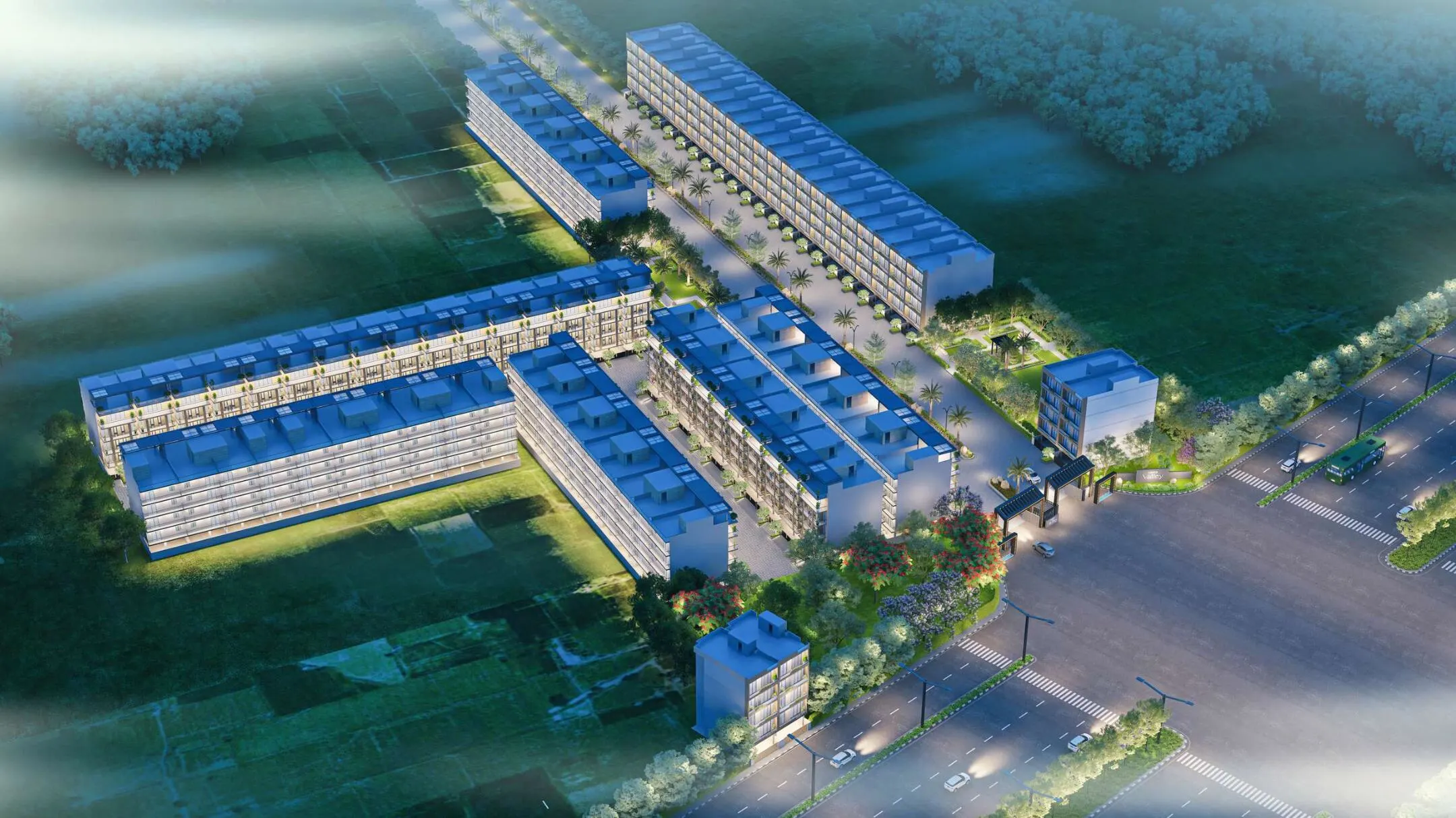
Live plotted and floor-format inventory is thin: Ganga Valley in Sector 78 offers plots of about 141 to 168 sq yd from around Rs 3.25 crore, and DLF Gardencity Enclave in Sector 93 offers 3 BHK independent floors at about Rs 2.4 crore. Against that sit dozens of apartment projects at every price point.
That scarcity is partly policy rather than demand. Haryana stopped issuing new affordable plotted housing licences inside the Gurugram-Manesar Urban Complex in April 2023, which pushed new plotted supply out to Sohna, Farukhnagar and the Kharkhoda belt. Our DDJAY guide explains what that means for anything marketed to you today as a new plot in Gurgaon.