Most rent-versus-buy articles compare an EMI with a rent cheque and declare a winner. In Gurugram that comparison is not just incomplete — it is usually describing a choice you do not have.
Here is why. Of the 88 live projects on our books, twelve are complete, five of those are commercial, and that leaves seven finished residential projects in the entire city. Everything else hands over between now and 2033, with about half the book dated 2030 or later.
So for most people buying a home in Gurugram this year, the honest framing is not "rent or buy". It is "rent, or rent and pay a construction loan at the same time" — for three to seven years. Once you see it that way, the arithmetic changes shape.
The arithmetic, on one real flat
Take a three-bedroom apartment at Rs 3.5 crore, which is roughly the middle of Gurugram's current new-build market. Assume a 20 per cent down payment and a 20-year loan. The RBI held the repo rate at 5.25 per cent on 5 August 2026, and lenders were advertising home loans from about 7.10 to 7.25 per cent for the strongest borrower profiles.
| Line | Buying | Renting the same flat |
|---|---|---|
| Cash needed on day one | About Rs 95 lakh — Rs 70 lakh down payment, roughly Rs 24.5 lakh stamp duty at 7 per cent, plus registration | About Rs 2.7 lakh — three months' deposit, plus one month's brokerage |
| Monthly outgo | EMI near Rs 2.21 lakh on a Rs 2.8 crore loan at 7.25 per cent over 20 years | Rent near Rs 90,000 at a 3 per cent gross yield on the same asset |
| Annual escalation | Fixed, unless the rate moves | Typically 5 to 10 per cent a year, or on renewal |
| Maintenance and repairs | Yours | Structural repairs are the landlord's; running costs are usually yours |
| What you own after ten years | The flat, less the outstanding loan, plus or minus what the market did | Nothing, and your deposit back |
The monthly gap is roughly Rs 1.3 lakh. The day-one gap is roughly Rs 92 lakh. Both numbers are the honest starting point, and both are routinely left out of the version you get at a sales gallery.
Two important qualifications, in both directions. Part of that EMI is principal, which is savings rather than cost — in the early years of a 20-year loan it is a small part, but it is not nothing. And the Rs 92 lakh you did not put down is not free money either; it earns something wherever you put it instead. Any comparison that ignores either of those is selling you something.
The multiple that actually settles it
Divide the purchase price by a year's rent. On the flat above: Rs 3.5 crore divided by Rs 10.8 lakh gives a price-to-rent multiple of about 32.
That number is the cleanest single reading of whether a market is priced for owners or for renters. As a rough guide, below about 20 the cash-flow case for buying is strong; above about 25 it is weak and the case for buying rests almost entirely on appreciation. Gurugram at 32 is firmly in the second camp, and that is consistent with what the yield data says from the other side: most Gurugram residential property nets 2.5 to 3.5 per cent after maintenance, vacancy and brokerage, and materially less after tax. Our rental yield guide does that arithmetic line by line.
This is not an argument against buying in Gurugram. It is a statement of what you are buying: an appreciation asset with a rent stream that partly covers the carrying cost. Gurugram's average residential price is reported to have moved from around Rs 6,150 per sq ft in early 2020 to roughly Rs 11,300 by early 2025, with current city-wide averages quoted between Rs 13,000 and Rs 14,500. Figures differ by source and by what each survey counts. If that continues, the multiple is beside the point. If it flattens for five years, the multiple is the whole story.
The Gurugram-specific trap: paying for two homes at once
This is the part that catches careful people, because they did the EMI arithmetic properly and then discovered it started three years before they could move in.
On an under-construction purchase, disbursement is tranche-based against construction milestones. You pay pre-EMI — interest only, on the amount released so far — for the entire build period. Principal repayment, and therefore equity, starts after final disbursement. Meanwhile you are still paying rent somewhere else.
Put numbers on it. On a Rs 2.8 crore loan drawn down over four years, interest alone across that period runs to a large seven-figure sum, and none of it buys you a rupee of the flat. Add four years of rent at Rs 90,000 rising 7 per cent a year, and the combined bill comfortably exceeds the discount that made the off-plan purchase attractive in the first place.
So the practical rule is this. If the handover is more than about three years out, add the pre-EMI you will pay to the rent you will pay, and put that total next to the price gap against a ready alternative. Sometimes the off-plan project still wins. Often it does not, and nobody had ever presented the two numbers side by side. Our home loan guide sets out the disbursement schedule, and the possession timeline shows how far out the market actually sits.
What renting costs that the rent cheque does not show
The renting column above is not as clean as it looks either.
- Eleven-month agreements. Almost every Gurugram tenancy is written for eleven months, and the reason is stamp duty and registration rather than anything about you. It means your housing security is renegotiated annually, and that is a real cost even when the renewal goes smoothly. Our rent agreement guide explains what actually governs a Haryana tenancy.
- Escalation. Gurugram leases commonly escalate 5 to 10 per cent a year or on renewal. Over ten years, a Rs 90,000 rent escalating at 7 per cent becomes about Rs 1.66 lakh. The EMI, on a fixed spread, does not do that.
- Moving costs. Brokerage of one month's rent per new tenancy, deposits locked up, and the days of your life a Gurugram move consumes.
- You cannot change anything. No structural work, no built-in storage worth the money, and a landlord who may sell the flat with you in it.
Where rents are actually moving, which is not uniform
One pair of numbers from the first half of 2026 is worth more than any general statement about the market. Rental values on the Dwarka Expressway grew roughly 22 per cent year on year. New Gurugram grew about 3 per cent. Other trackers put the expressway corridor's growth nearer 10 to 15 per cent, and report far steeper multi-year moves in specific sectors on that belt between 2023 and 2026, so treat the exact figure as a band rather than a reading. The direction is not in dispute.
That gap is a difference in kind, not degree. The expressway's towers finished, the road became fully operational, and a tenant pool that had no reason to look there arrived at once. The caveat matters as much as the number: that is a catch-up off a low base, not a run rate. Corridors do this once.
For current asking rents, the ranges reported for the newer corridors put a three-bedroom roughly between Rs 45,000 and Rs 1.5 lakh a month depending on the building and the finish, with two-bedrooms in mid-segment sectors such as 65 to 67 commonly quoted around Rs 45,000 to Rs 60,000. On Golf Course Road, three-bedroom rents are quoted anywhere from Rs 1.1 lakh to Rs 3 lakh against capital values of Rs 3 crore and up — which is exactly why the percentage yield there is the lowest in the city.
When buying clearly wins
- You will hold for seven years or more. Transaction costs alone — roughly 7 per cent stamp duty, registration, brokerage — take three to four years of appreciation to recover before you have made anything.
- You are buying something ready, or nearly. No pre-EMI, no double outgo, no construction risk, no GST. On a completed home with a completion certificate, GST is nil; on under-construction non-affordable stock it is 5 per cent with no input credit.
- You want the house you want. This is not a financial argument and it does not need to be. Renovating a home you own, in a city where you intend to stay, is worth something no spreadsheet captures.
- The buyer is a woman. Haryana charges 5 per cent stamp duty for a female buyer against 7 for a male one. On Rs 3.5 crore that is Rs 7 lakh, and it is the single easiest saving in the transaction. Our registry charges guide has the full schedule.
When renting clearly wins
- You might leave within three years. Job, city, country — if any of those is genuinely open, buying is an expensive way to express uncertainty.
- Buying would consume your emergency fund. A Rs 95 lakh day-one cost that leaves nothing behind it converts a normal bad year into a forced sale, and forced sales in Gurugram's outer sectors are slow.
- You want an address you cannot afford to buy. Renting on Golf Course Road at a 2.5 per cent yield means the owner is subsidising your postcode. That is a rational trade for you and a considered one for them.
- The only thing in your budget is a 2032 handover. Renting for six years is not a failure. It is what you were going to do anyway — the question is only whether you also want a construction loan running alongside it.
If you decide to buy, four things to fix before you sign
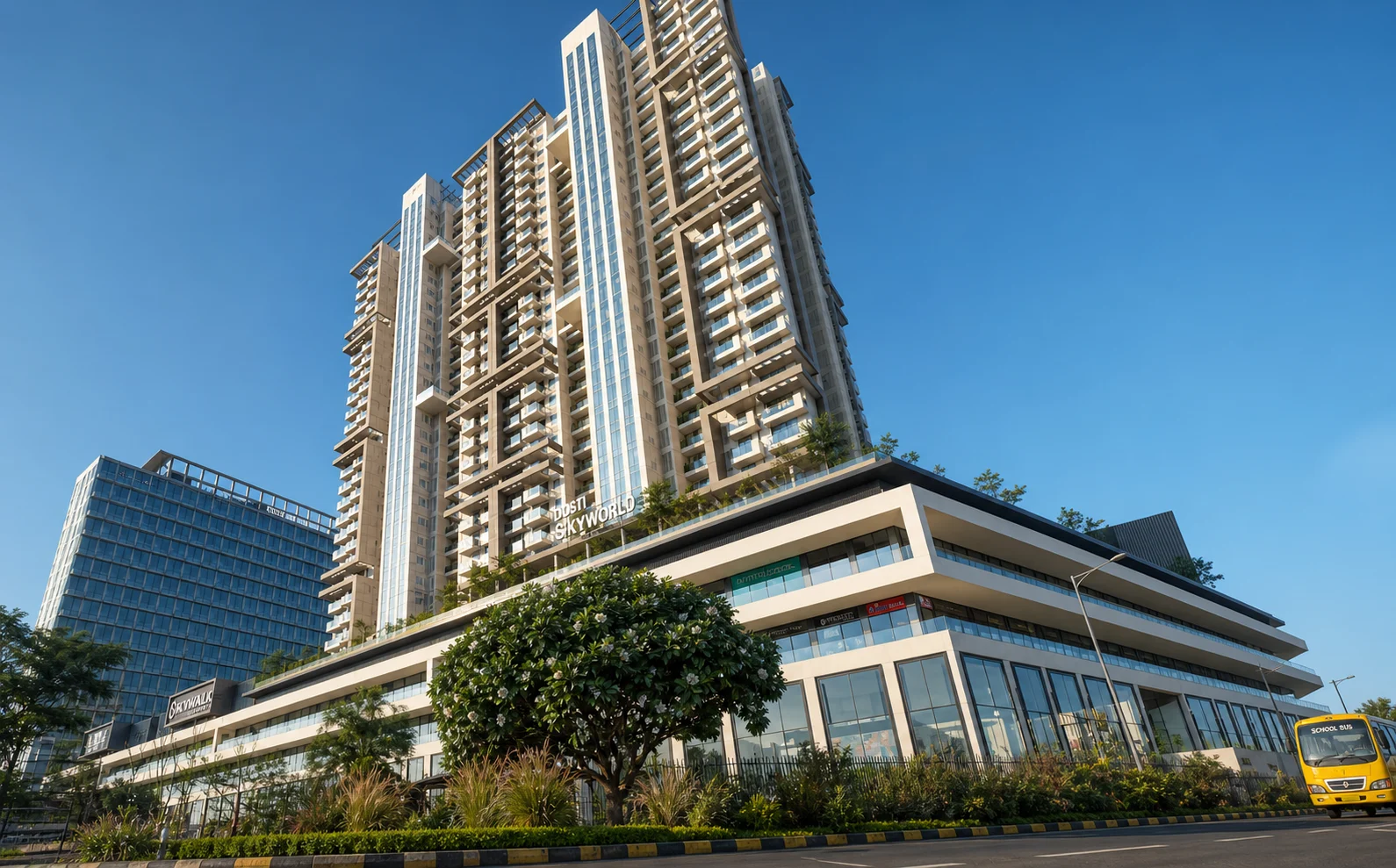
- Total the wait. Pre-EMI plus rent, from today to the registered handover date, in one number. Put it next to the price gap against a ready alternative such as Sobha City or M3M Skywalk. The ready-to-move guide lists what is actually complete.
- Read the registered completion date on the Haryana RERA portal, not the marketing one. Four projects on our books carry possession dates that have already passed against an under-construction status.
- Budget the collector rate, not the sale price. Stamp duty is charged on the higher of the two, and Haryana's revised rates took effect on 1 April 2026 with reported increases of roughly 15 to 30 per cent across the areas that changed, and steeper revisions in some pockets.
- Get the carpet area in writing. Every per-square-foot comparison you make on super area is comparing two numbers that were not calculated the same way.
Our actual view
If you are staying in Gurugram for a decade and you can buy something finished without emptying your reserves, buy. The transaction costs are recoverable over that horizon and the rental market is not cheap enough to make renting a real saving.
If your budget only reaches a 2030 or 2032 handover, be clear-eyed that you are choosing to rent for the next several years and to service a construction loan while you do it. That can still be the right call when the entry price genuinely compensates. It is the wrong call when nobody ever showed you the combined number.
Tell us the budget, the horizon, and whether you might move cities. We will run the comparison on a specific flat rather than a generic one — including the case where the answer is to keep renting for two more years.