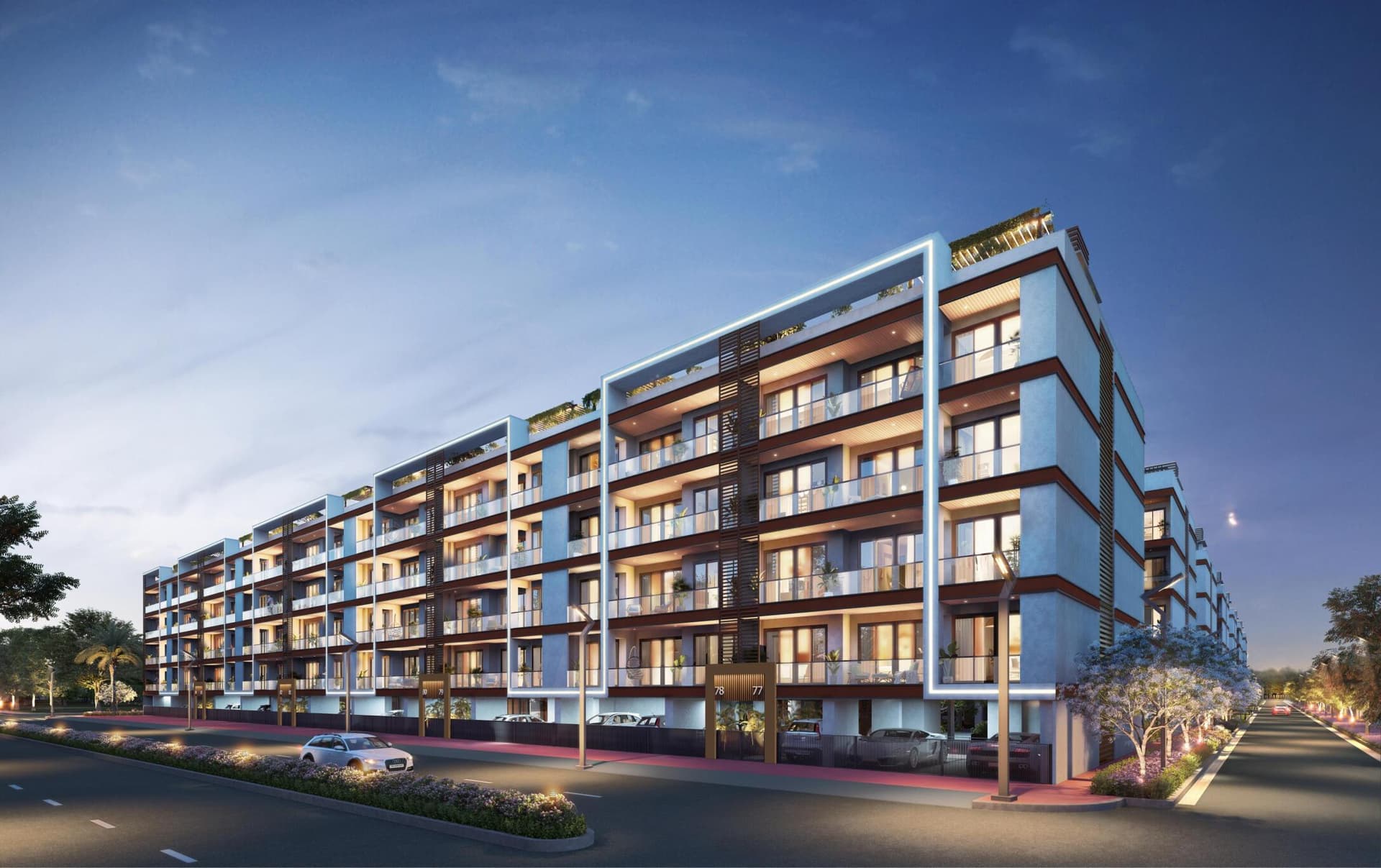
"Growing" is the most abused word in Gurugram property marketing. Every sector is described as the next big thing, usually by someone holding inventory in it. So here is a stricter definition: an area is genuinely growing if you can point at a piece of physical infrastructure that has been built or funded, and at a rate revision that the state government has actually notified.
By that test, seven Gurugram micro-markets qualify in 2026. We have ordered them by how far along the growth already is, because that determines whether you are buying appreciation or buying the hope of it.
The evidence we used
Two public data points do most of the work here.
First, Gurugram's collector rates (circle rates) were revised from 1 April 2026, and the revision was not uniform. Increases ran from about 15 percent in established areas like Sector 29 up to roughly 75 percent along Dwarka Expressway and the Southern Peripheral Road. The state does not raise a rate 75 percent for sentiment - it does it because registered transaction values in that belt have already moved.
Second, the Gurugram Metro. Phase 1, a 15.2 km stretch from Millennium City Centre to Sector 9, is under active civil construction with over 900 pillars cast and about 11 percent overall physical progress as of mid-2026. Target readiness for that stretch is August 2028. The full 28.5 km corridor to Cyber City runs 27 stations. Metro alignment is the single most reliable long-run predictor of residential demand in this city.
1. Dwarka Expressway (Sectors 99-113)
The most mature of the "new" corridors, and the one where the growth story has already substantially played out. The 27.6 km expressway has been operational since 2025, with the Haryana stretch inaugurated in March 2024. Circle rates in the 104-115 belt were revised up by around 30 percent, with parts of the corridor at the top of the 75 percent band.
What you are buying now: a functioning corridor with real occupancy, not a promise. Social infrastructure - schools, clinics, groceries - is filling in rather than absent.
The catch: the easy money was made between 2021 and 2025. Expect steadier, slower appreciation from here.
Live inventory: projects on Dwarka Expressway, including M3M Capital, Smartworld One DXP and Emaar Urban Ascent. We have a longer piece on this corridor: Dwarka Expressway explained.
2. Southern Peripheral Road / SPR (Sectors 68-79)
SPR is the corridor we point most investors at in 2026, because it sits at the useful midpoint: infrastructure is built, prices have moved, but the belt is not fully priced yet. It also carries the same up-to-75-percent circle rate revision as Dwarka Expressway, which is the state confirming what transaction data already showed.
The reason SPR works structurally is that it connects Golf Course Extension Road to NH-48 without going through the old city. For anyone commuting to Cyber City or the airport, that matters daily.
What you are buying: road connectivity that is already delivered, plus a heavy pipeline of new launches from Signature Global, Birla, Tulip and Whiteland in Sector 71.
The catch: some SPR stretches still have construction traffic and incomplete service roads. Drive it at 9 am before you buy, not at 3 pm.
See Signature Global Titanium SPR, Birla Pravaah, Tonino Lamborghini Residences and Nitara One Good Earth.
3. Sectors 63, 63A and 64 (Golf Course Extension)
Circle rates in Sectors 63, 63A, 64 and 67 were revised up roughly 45 percent, from about Rs 58,500 to Rs 84,825 per square yard. That is one of the sharpest revisions in the notification, and it reflects the cluster of premium launches that landed here - DLF, Adani, Birla, TARC, Silverglades and Sobha all have live product in this pocket.
What you are buying: Golf Course Extension address without full Golf Course Road pricing, with genuinely premium neighbours.
The catch: it is now an expensive entry. This is an appreciation play with a long horizon, not a yield play.
Projects: DLF The Arbour, Adani Samsara Ivana, TARC Ishva, Silverglades The Legacy and Sobha Crescent.
4. New Gurugram (Sectors 78-95)
This is where the rental-yield argument is strongest. Entry prices in sectors like 82, 83, 85 and 89 sit meaningfully below the Golf Course belt, while rents have held up because of employment along NH-48 and the Manesar industrial belt. Published yields for this pocket cluster around 3.8 to 4.5 percent, versus a Gurugram residential average nearer 3 to 4 percent. Sector 82 rates hovered around Rs 11,100 per sq ft in mid-2026.
Worth being honest about the range you will see quoted: 3 BHK rents in the 82A and 83 belt run roughly Rs 22,000 to Rs 35,000 a month, and yield figures vary a lot by source and by entry price. Treat any single number you read as an estimate, including ours.
What you are buying: the best rent-to-price ratio in the city.
The catch: resale liquidity is thinner than the premium corridors. Plan to hold.
See New Gurugram projects - Ganga Anantam, Trehan Iris Broadway, Sobha Aranya, SS Kiavasa.
5. Sector 36A and the Metro-adjacent belt
Sector 36A is the clearest example of buying ahead of infrastructure rather than after it. The Gurugram Metro Phase 1 alignment runs Millennium City Centre to Sector 9, and the corridor's 27 stations pull the old-city and western sectors into the network for the first time. Krisumi and Max have both committed serious capital here.
What you are buying: a 2028-2030 connectivity story at 2026 prices.
The catch: it is a 2028-2030 story. Social infrastructure today is thinner than the marketing suggests. Do not buy this if you need to move in and have everything working next year.
See Krisumi Waterfall Residences and Max Antara.
6. Sectors 103-108 (Northern Dwarka Expressway)
The northern end of the expressway belt behaves differently to Sector 113. It is closer to Delhi and IGI, which matters for anyone whose work sits on the Delhi side rather than in Cyber City. A proposed extension of the eight-lane expressway towards Delhi's Mayapuri Ring Road, floated in a master plan in mid-2026, would strengthen exactly this argument - though a proposal is not an approval, and should be treated as upside rather than a reason to buy.
What you are buying: airport and Delhi access with Gurugram pricing.
The catch: the Mayapuri extension is at proposal stage. Do not pay today for something announced but not funded.
Projects: Sobha Altus, Godrej Vrikshya, Sobha City, Westin Residences.
7. Sohna Road and South Gurugram
Last on the list deliberately. Sohna has the largest gap between narrative and delivered infrastructure of anything here. The land is cheap for a reason, and some of the enthusiasm around it is people trying to exit positions bought in the previous cycle.
That said, for a genuinely long horizon - eight years plus - and for commercial plot formats rather than apartments, there is a case. We wrote about the commercial side separately in SCO plots on Sohna Road.
What you are buying: the lowest entry price in the district.
The catch: the longest and least certain wait. Size the position accordingly.
Side by side
| Micro-market | Stage | 2026 circle rate move | Best for |
|---|---|---|---|
| Dwarka Expressway | Mature | Up to ~75% at the top end | End-users wanting it built already |
| SPR (Sec 68-79) | Mid-cycle | Up to ~75% | Balanced risk and upside |
| Sec 63 / 63A / 64 | Premiumising | ~45% | Long-horizon appreciation |
| New Gurugram | Yield stage | Moderate | Rental income |
| Sec 36A / Metro belt | Early | Moderate | 2028-30 connectivity bet |
| Sec 103-108 | Mid-cycle | ~30% | Delhi and airport access |
| Sohna Road | Early / speculative | Lower | Very long horizon only |
What actually decides your return
Corridor choice sets the ceiling. Entry price sets the floor. We see people get the corridor right and still make nothing, because they bought at a launch price that already assumed five years of appreciation.
Two practical guardrails. Compare the developer's asking price per square foot to the revised circle rate for that sector - if the gap is unusually wide, ask what justifies it. And remember stamp duty is charged on the higher of transaction value or circle rate, at 7 percent for male buyers and 5 percent for women in urban Haryana, so a 75 percent circle rate revision raises your closing cost regardless of what you negotiate on the sticker.
Tell us your budget and commute and we will name the three sectors that actually fit, plus the two we would rule out. Start with trending projects or talk to us directly.