
The pitch for commercial property in Gurgaon is always the same, and the arithmetic behind it is not wrong: 6 to 9 per cent rental yield against 2 to 4 per cent net on a flat. Two to three times the income from the same rupee.
What the pitch leaves out is that the yield gap is the smallest of the differences between these two assets. The gap in entry ticket, in leverage, in vacancy behaviour and in how easily you get out again are all larger, and they do not all point the same way.
Here are both sides, with numbers from our own live inventory rather than from a generic table.
The entry ticket: commercial starts five times lower
| Cheapest on our books | What you get | |
|---|---|---|
| Commercial | Trehan Iris Broadway, Sector 85 — Rs 26.67 lakh | A 100 sq ft shop on a high street occupied since December 2020 |
| Commercial | M3M Urbana, Sector 67 — Rs 30 lakh | A 300 sq ft ready retail or office unit on SPR |
| Residential | Sobha Altus, Sector 106 — Rs 1.46 Cr | A 678 sq ft studio, handover December 2031 |
| Residential | Pitrachaya Dev Luxury Floors, Sector 70 — Rs 1.85 Cr | A ready 3 BHK independent floor of 1,395 sq ft |
Rs 26.67 lakh against Rs 1.46 crore. That is the single most under-discussed difference between the two asset classes in Gurgaon. Commercial is where a first-time investor can actually start, because retail sells in small formats and residential does not. There is no 100 sq ft flat.
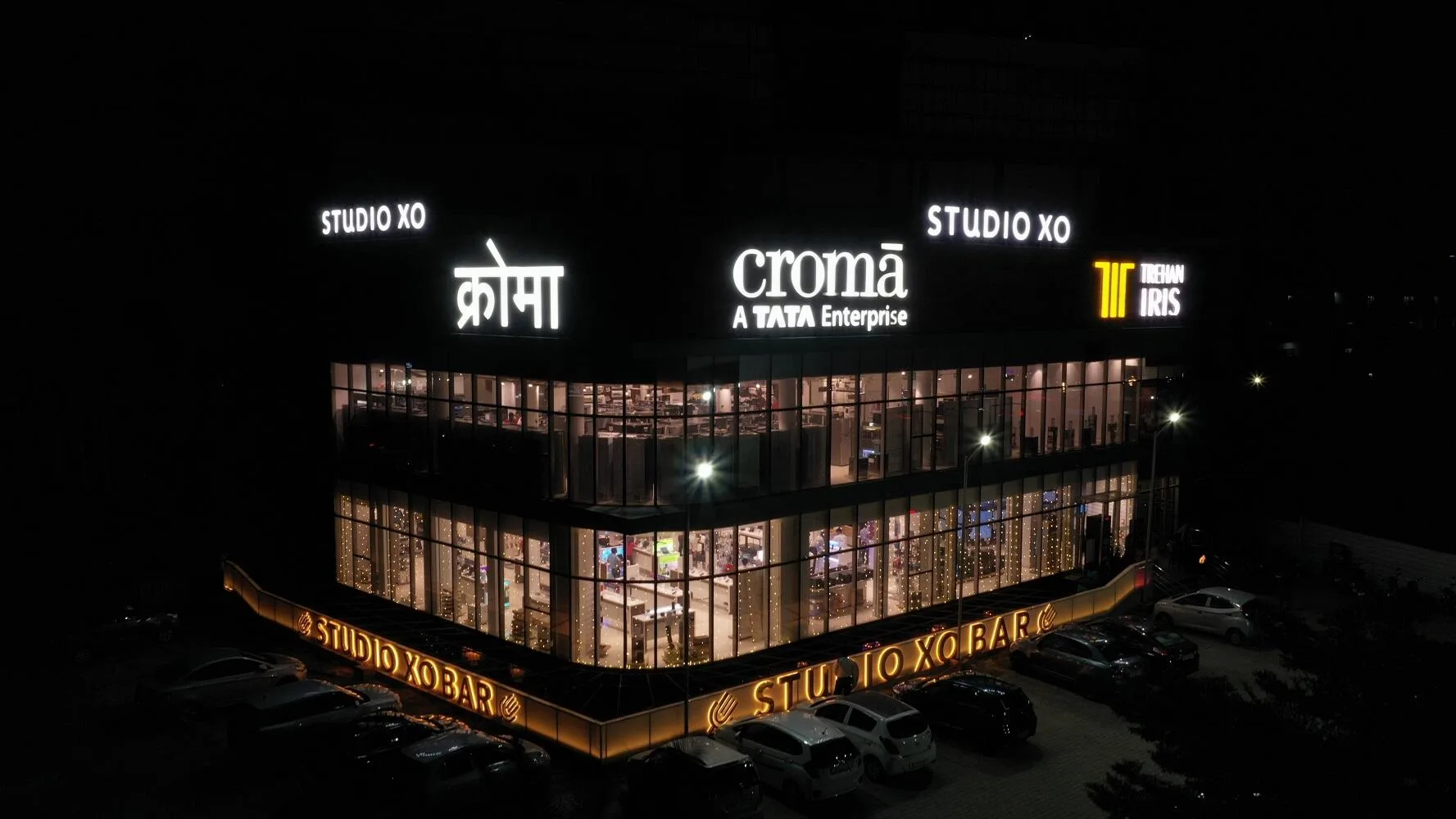
One caveat before you treat that as an argument. A 100 sq ft kiosk works out to roughly Rs 26,670 per sq ft, more per square foot than a 3 BHK in the same sector. Small commercial formats are priced on earning power, not on size, so a low ticket is not the same thing as a low rate. Our guide to property investment in Gurgaon under Rs 1 crore works through what that budget genuinely reaches on each side.
Leverage runs the other way, and it matters more than the yield
Residential lending is the most subsidised credit in the country. Home loans can reach 75 to 90 per cent of value depending on the loan size, at rates reported from around 7.1 to 8.5 per cent. Commercial property loans typically fund 50 to 70 per cent, with some public sector lenders reaching about 75 per cent for strong borrowers, and at higher rates — commonly reported from about 8 per cent upward.
Work an example on a Rs 1 crore purchase in each class, holding everything else aside:
| Commercial at 60% LTV | Residential at 80% LTV | |
|---|---|---|
| Your own capital | Rs 40 lakh | Rs 20 lakh |
| Gross annual rent, illustrative | 7% = Rs 7 lakh | 3% = Rs 3 lakh |
| Rent per rupee of own capital | Rs 0.175 | Rs 0.15 |
The yield ratio was better than two to one. After leverage, the gap on capital deployed narrows sharply — and that is before interest cost, which is higher on the commercial loan. Commercial still wins on income, but by far less than the headline suggests, and the arithmetic is sensitive to exactly what LTV your bank offers you, which is a question to settle before you shortlist anything.
Vacancy is where the two assets really separate
A 3 BHK in a running Gurgaon society re-lets in weeks. There are always tenants, the rent is set by dozens of comparable units in the same complex, and your downside in a bad market is a lower rent rather than no rent.
A shop is not like that. It can sit empty for months, because the tenant pool for one specific unit at one specific location is small, and the wrong unit — a first floor with poor access, a corner the footfall does not reach — can stay empty far longer than that. Meanwhile maintenance and property tax continue.
Put numbers on it. Take a commercial unit yielding 8 per cent on paper:
- Three months vacant in every three years: the realised yield is about 7.3 per cent.
- Six months vacant in every three years: about 6.7 per cent.
- A year vacant between tenants: about 5.3 per cent — still ahead of residential, but no longer a different league.
This is the discipline the commercial pitch usually skips, and it is also why buying a completed scheme you can inspect beats buying a rendering. On a ready high street you can count shuttered units, ask tenants what they pay and find out whether upper floors let at all. On a 2029 launch you are taking all of that on trust.
The tax treatment differs at every stage
| Stage | Commercial | Residential |
|---|---|---|
| Buying under construction | GST applies, with input tax credit available | GST at 5 per cent for non-affordable housing and 1 per cent for affordable, both without input tax credit |
| Buying completed | No GST once the completion certificate has been issued | No GST once the completion certificate has been issued |
| Renting out | Rent attracts GST at 18 per cent; as landlord you may need to register, and the tenant deducts TDS at 10 per cent above the Rs 6 lakh a year threshold | Letting a home to an individual for residential use is exempt from GST; TDS rules still apply above the threshold |
| Rental income tax | Taxed as income from house property, with the 30 per cent standard deduction and interest deduction | Same treatment |
| Selling | Capital gains, holding period and indexation rules as applicable | Same rules, but residential sellers have reinvestment reliefs that commercial sellers do not |
Two of those rows do real work. The GST on commercial rent is neutral if your tenant is a GST-registered business claiming credit, and a friction if they are not — it narrows your tenant pool at the small end. The reinvestment reliefs on the sale side are a genuine structural advantage for residential that no yield table shows. Get both checked against your own position by your accountant; our guide to capital gains tax on property sale in Gurgaon sets out the sale-side mechanics.
One more cost that has just changed for both: Haryana notified a new capital-value property tax methodology, effective for Gurugram from 1 September 2026, computed from the applicable collector rate. Commercial rates run above residential ones. Our guide to property tax in Gurgaon has the detail.
Getting out again
Exit is the question investors ask last and regret first.
A 3 BHK in an established society has a deep buyer pool: families, end users, and a price discovered by many recent transactions in the same complex. You will get an offer. You may not like it, but you will get one.
A shop or an office floor sells to investors, and investors buy on yield. That means your exit price is largely a function of the rent you have contracted — a well-tenanted unit with a long lease and a solid covenant sells well, and a vacant one is difficult at any price. The asset is worth what its lease says it is worth.

This is the reason pre-leased commercial exists as a category of its own, and why it prices at a premium to vacant stock. If income certainty is what you want from commercial, buying the tenant along with the unit is usually the more honest way to get it — we go through the underwriting in our guide to pre-leased property in Gurgaon.
So which one, for you
- Buy residential if this is your first investment property, if you want a financeable asset with a deep resale market, if you might live in it or hand it to family, or if you need the reinvestment reliefs on eventual sale. Accept that the yield will be 2 to 4 per cent net and that your return is mostly capital appreciation.
- Buy commercial if you can fund 40 per cent or more from your own capital, if you can absorb months of vacancy without distress, if you are willing to do real diligence on footfall and tenant quality, and if you want income now rather than appreciation later.
- Buy commercial small and ready before you buy commercial large and promised. A Rs 26.67 lakh unit on a high street that already trades teaches you more about how this asset class behaves than any amount of reading, and the mistake is survivable.
- Do not compare a commercial yield with a residential yield without adjusting for leverage, vacancy and GST. Adjusted, the gap is real but ordinary. Unadjusted, it is a sales pitch.
For the sector-level numbers behind all of this, see our guides to rental yield in Gurgaon, safe real estate investment in Gurgaon and the top investment plans in Gurgaon real estate. If you are choosing premises for your own business rather than for income, that is a different calculation again — we work it through in lease versus buy for office space in Gurgaon.
Everything live sits under commercial property in Gurgaon and residential property in Gurgaon.