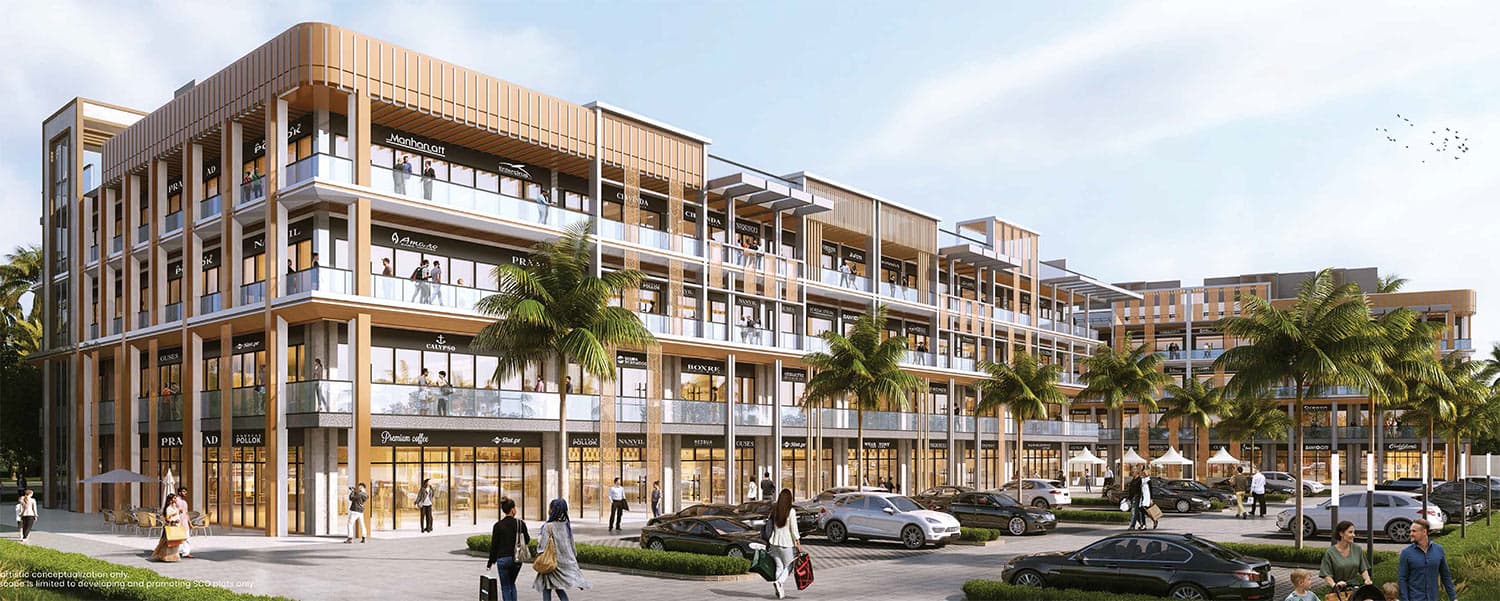
Renting a shop is not renting an office. An office has to be adequate; a shop has to be in exactly the right place, and the difference between the right unit and the one forty metres away is the difference between a business and a lease you are stuck paying.
This is what we tell people looking for retail space in Gurugram — where to look, what it costs, and the clauses in a retail lease that quietly decide whether you make money.
What retail actually costs to rent here
Reported rents in Gurugram run roughly Rs 80 to Rs 300 per square foot per month, which is a wide enough band to be almost useless until you break it down by what drives it:
| Type of location | Where the rent sits in that band | Why |
|---|---|---|
| Established mall, ground floor, high footfall | Top of the range and above it | Guaranteed footfall you do not have to generate yourself |
| Prime high street - Sector 29, Golf Course Road, MG Road | Upper half | Visibility and an existing eating-and-drinking catchment |
| Established sector market - Sectors 14, 47, 50, 56 | Middle | Captive residential catchment, lower footfall, cheaper |
| New high street on a developing corridor | Lower half, sometimes with rent-free periods | The catchment does not exist yet - you are being paid to wait |
| Upper floors, anywhere | Bottom | Footfall halves with every floor you go up |
Two structural points behind those numbers. First, upper floors are cheap for a reason and the discount is rarely as large as the footfall drop. Second, on developing corridors like Dwarka Expressway, where high-street retail capital values have been reported around Rs 25,000 to Rs 35,000 per square foot, developers price rents optimistically against a catchment that has not moved in yet. Negotiate for a fit-out period and a phased rent, not a discount on the headline.
The five clauses that decide whether the lease works
This is where retail leases differ most from residential ones, and where most first-time retail tenants in Gurugram get hurt.
1. Lock-in versus notice period
These are not the same thing and landlords sometimes present them as if they are. The lock-in is the period during which you cannot leave at all — walk out inside it and you typically owe the rent for the remainder. The notice period is how much warning you must give after the lock-in ends.
Ask for the lock-in to be mutual. A lease that locks the tenant in for three years while letting the landlord terminate on three months' notice is common and is not reasonable, and it is negotiable far more often than people assume.
2. The security deposit
Retail deposits in Gurugram commonly run to several months' rent, and on prime units they can be considerably more. Two things to fix in writing: when it is refunded — it should be on handover of vacant possession, not "after settlement of accounts", which can mean anything — and whether it is interest-free. On a large deposit over five years, that is real money.
3. Rent escalation
Retail leases here almost always escalate. The common structure is a percentage step every few years. What matters is compounding: an escalation applied to the escalated rent behaves very differently over a nine-year lease from one applied to the original rent. Ask for the escalated figure for each year of the term to be written into a schedule in the lease, in rupees. If the landlord will not put the numbers in, that tells you something.
4. CAM, and what it does not cover
Common area maintenance is billed separately, per square foot per month, and retail CAM is higher than office CAM — escalators, atriums, parking, common toilets and marketing all sit inside it. It is also frequently variable rather than fixed.
Ask three questions: what is CAM today in rupees per square foot, how has it moved over the last three years, and is there a cap on annual increases. A lease with a competitive rent and an uncapped CAM is not a competitive lease. Our commercial leasing guide goes deeper into how these charges are structured.
5. Fit-out period, signage and exclusivity
Three smaller items that are worth asking for and are often granted:
- A rent-free fit-out period, typically measured in weeks, while you build out the shop. You are not trading during it and you should not be paying full rent for it.
- Signage rights in writing — where your board goes, how big, and whether the landlord can change it. For a retail business the signage is part of the asset.
- An exclusivity or radius clause, if you can get one, preventing the landlord from letting the adjacent unit to a direct competitor. Landlords resist it, but in a mall with a defined tenant mix it is a normal ask.
Mall or high street
The question most retail tenants actually have to answer.
| Mall | High street | |
|---|---|---|
| Footfall | Provided by the landlord | You generate it |
| Rent structure | Often a minimum guarantee against a revenue share, whichever is higher | Usually straight rent |
| CAM | Higher, and covers a lot more | Lower, and covers less |
| Trading hours | Set by the mall | Yours |
| Reporting | You may have to share sales data | None |
| Suits | Brands, F&B chains, anything impulse-driven | Destination businesses, services, clinics, salons |
The revenue-share point deserves attention. In a mall you will often be quoted a minimum guarantee or a percentage of turnover, whichever is higher. Model both. If your business does well, the percentage is what you will actually pay, and a percentage that felt harmless at your break-even projection can be punishing at three times that.
The tax and registration bits
- GST at 18 percent applies to commercial rent. If you are registered you will generally claim it as input credit, but it is still a cash-flow item every month.
- TDS under Section 194-I — as tenant you deduct on rent above the annual threshold and deposit it. Agree in the lease who handles the paperwork.
- A lease exceeding eleven months should be registered. Unregistered long leases are extremely common in Gurugram and they are weak evidence if you ever have to enforce them. Registration costs stamp duty; the protection is usually worth it, particularly if you are spending on fit-out.
Where we would look, by business type
- Food and beverage wanting evening footfall — Sector 29 and the established high streets first, then the newer high streets on Golf Course Extension and SPR.
- Services, clinics and salons — established sector markets with a captive residential catchment. You do not need passing trade; you need parking and to be findable.
- Brand retail — malls, and accept the revenue share.
- Anything price-sensitive on rent — new high streets on developing corridors, with a long rent-free period negotiated up front. You are betting on the catchment arriving; make sure the lease pays you to wait.
Live availability sits on our retail shops in Gurgaon and commercial property pages, and SCO plots if you are considering buying rather than renting.
If you are the landlord instead
Good retail returns are reported in the 6 to 10 percent range, materially above the 3.5 to 4.3 percent band reported for Gurugram residential. That gap is the reason investors keep moving into retail — and the reason to be careful. The high return exists because retail carries operating risk that residential does not: a vacant shop in the wrong location can stay vacant, and the wrong tenant mix can hollow out a whole high street.
Our rental yield guide works through the comparison properly.
Our actual view
The lease terms matter more than the rent. We have seen tenants negotiate hard on rent per square foot, win, and then sign an uncapped CAM with a one-sided lock-in and a compounding escalation that costs them multiples of what they saved.
Get the rent to a sensible number, then spend your remaining negotiating energy on lock-in symmetry, the CAM cap and the escalation schedule. And walk the location at the hour your business actually trades — a Tuesday evening, or a Saturday afternoon — not when the leasing agent suggests.
Tell us the business and the catchment you need and we will shortlist the three or four units that genuinely fit, rather than everything that is vacant.
The live retail stock these numbers apply to
Rent bands are only useful next to real units. What is currently available, all of it built:
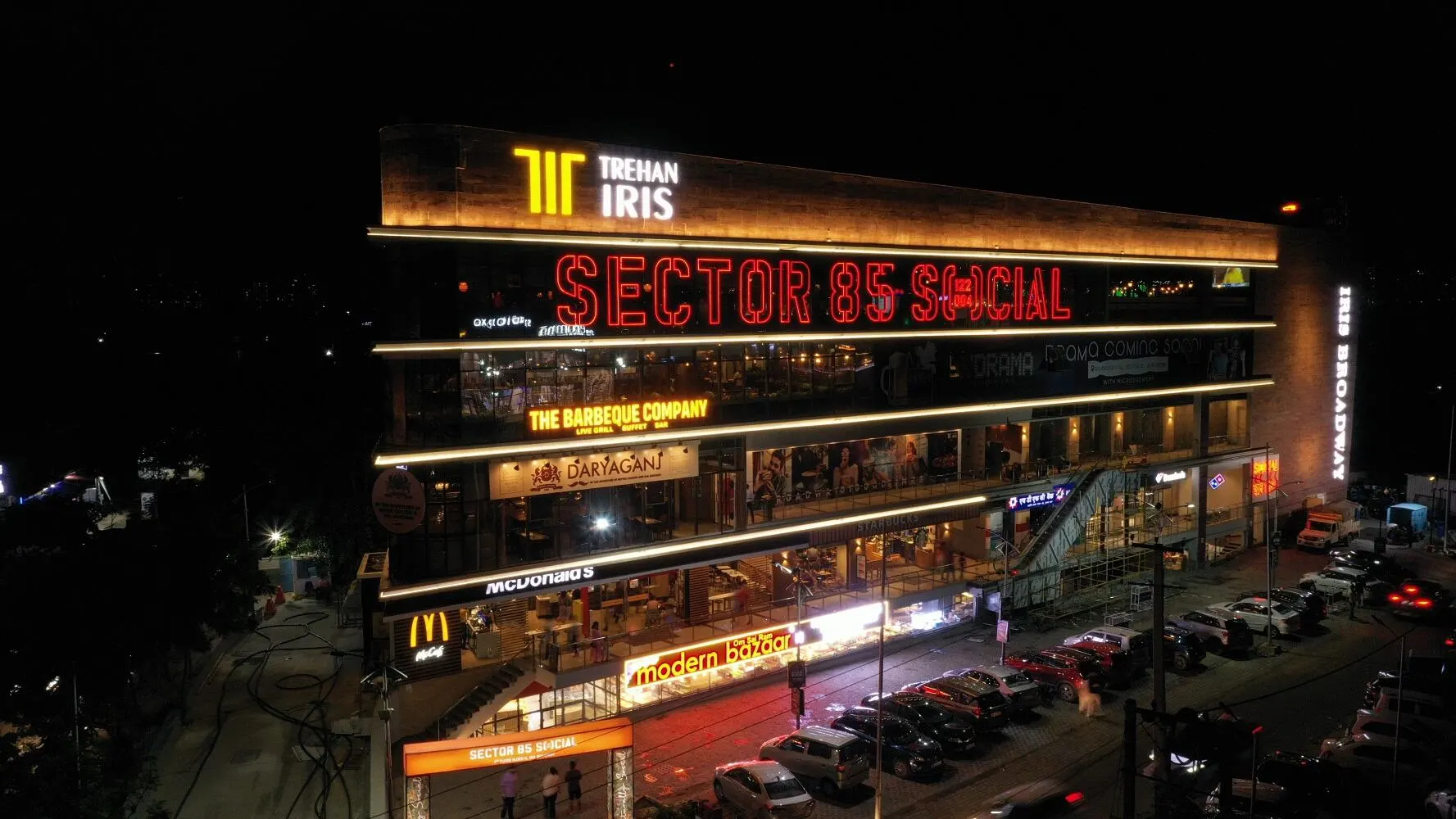
- Trehan Iris Broadway, Sector 85 - shops of 100 to 1,213 sq ft from about Rs 26.67 lakh, handed over in December 2020. The smallest entry ticket in our commercial inventory.
- M3M SCO, Sector 113 on Dwarka Expressway - 540 to 3,600 sq ft, completed July 2023.
- M3M Urbana, Sector 67 - 300 to 2,500 sq ft on Golf Course Extension Road, completed 2021.
- Reach The Bazaria, Sector 68 on Sohna Road - a new launch, so priced and timed differently from the four above.
Note how many of these are already complete. In retail that matters more than in any other asset class: footfall is measurable in a finished scheme and guesswork in a render. If you are buying rather than renting, our pre-leased property guide covers what an in-place tenant is worth.